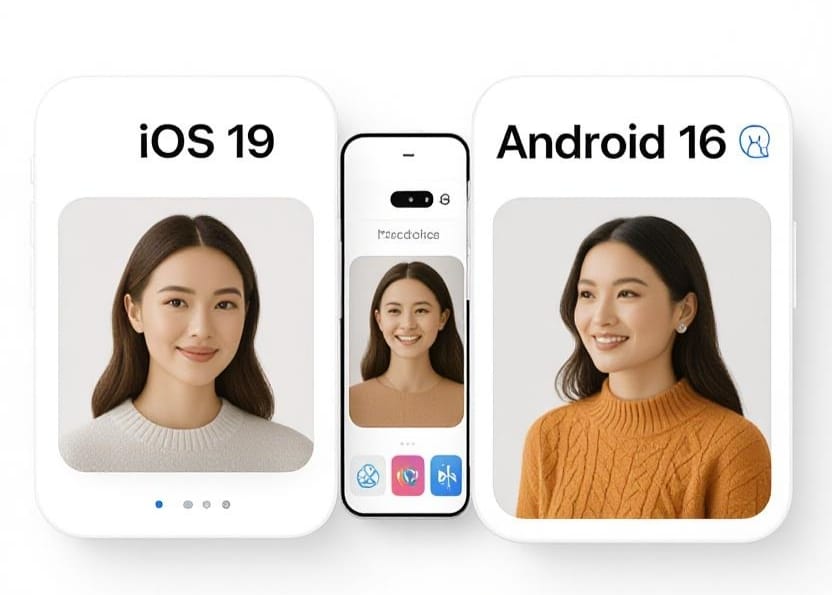
Smartphone enthusiasts are always divided into two camps: Apple’s iOS users and Google’s Android fans. With the release of iOS 19 and Android 16 in 2025, the competition has reached a new level. Both operating systems bring fresh UI (User Interface) enhancements, improved animations, and smoother experiences. But the big question is: Which UI feels smoother in 2025 – iOS 19 or Android 16?
In this article, we’ll dive deep into performance, animations, customization, and overall fluidity to compare the UI smoothness of both platforms.
iOS 19 UI Overview
Apple has always focused on consistency, fluid animations, and stability, and iOS 19 continues this tradition. Here are some highlights:
- Refined Dynamic Island 2.0 – More fluid and responsive with better app integration.
- Haptic Feedback Enhancements – Subtle vibrations that make navigation feel more natural.
- Adaptive Refresh Rate – 1Hz to 120Hz ProMotion on iPhones ensures smooth scrolling without draining the battery.
- Improved Widgets & Lock Screen – Widgets are now more interactive and optimized for smoother transitions.
- System-wide Animation Upgrades – App openings, multitasking, and gestures feel faster and more responsive.
Verdict so far: iOS 19 doubles down on smooth, polished UI animations that feel seamless across devices.
Android 16 UI Overview
Android has historically offered more customization at the expense of occasional lag or inconsistency. But with Android 16, Google is closing the gap:
- Material You 3.0 – Dynamic color theming is smoother and transitions are less jittery.
- Optimized Animations – Google has focused on removing micro-stutters, making gestures more consistent across devices.
- AI-Powered UI Adjustments – The system intelligently reduces background load to prioritize smoother scrolling and touch response.
- Ultra Fluid Scrolling – On high-end Android flagships with 144Hz displays, scrolling feels faster and snappier than ever.
- Universal Adaptive Controls – Even budget phones running Android 16 show fewer lags due to better resource management.
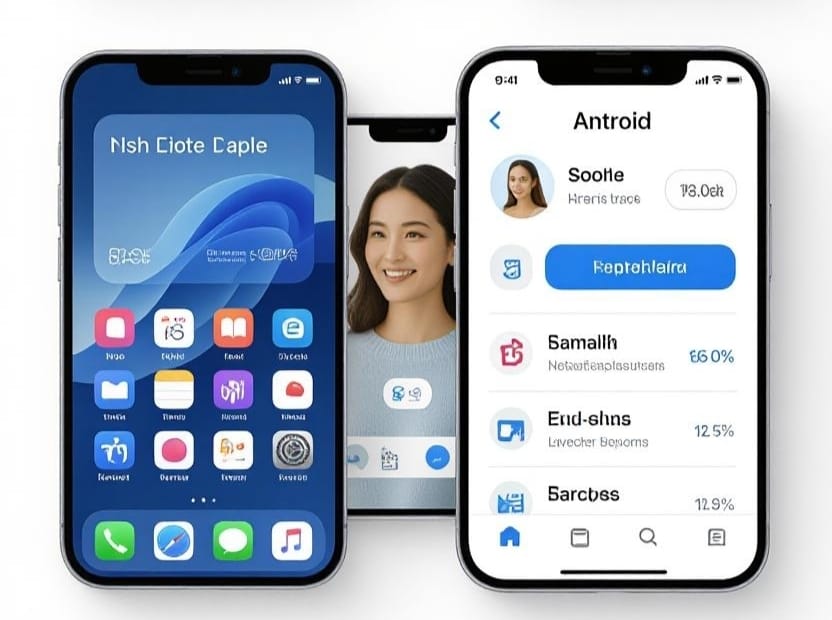
Performance & Smoothness: iOS 19 vs Android 16
| Feature/Aspect | iOS 19 | Android 16 |
|---|---|---|
| Animation Smoothness | Ultra-polished, consistent across all iPhones | Very smooth on high-end devices, slightly varied on mid-range |
| Scrolling Experience | 120Hz ProMotion with buttery gestures | Up to 144Hz on flagships, but depends on manufacturer |
| Multitasking Transitions | Seamless app switching with minimal lag | Improved, but some skins add extra animations |
| Consistency Across Devices | Same smoothness from iPhone SE to iPhone Pro Max | Varies depending on brand (Samsung, OnePlus, Pixel, etc.) |
| Customization vs Stability | Stable, less customizable | Highly customizable, but stability varies |
Verdict so far: Android 16 has finally polished its UI to feel fluid, dynamic, and visually cohesive, even on mid-range devices.
User Experience in Daily Life
- iOS 19: Perfect for users who want flawless transitions, stable animations, and long-term smoothness. Apple’s tight control over hardware and software ensures minimal lag over years.
- Android 16: Best for users who prefer personalization, higher refresh rates, and AI-driven enhancements. However, the experience may differ between brands (Samsung’s One UI vs Google Pixel UI vs OnePlus OxygenOS).
Benchmark & Real-World Testing
- Benchmarks: In synthetic tests, iOS 19 still has the edge in animation stability and frame drops.
- Real-World Use: Android 16 feels equally smooth on high-end devices like Samsung Galaxy S25 Ultra or Google Pixel 9 Pro, sometimes even faster due to 144Hz screens. On mid-range phones, though, iOS still feels more polished.
Which One is Smoother in 2025?
- If you value consistency and long-term smoothness → iOS 19 wins.
- If you love high refresh rates, customization, and AI-powered fluidity → Android 16 feels smoother on flagships.
In simple terms:
- iOS 19 = Consistent, reliable smoothness across all devices.
- Android 16 = Ultra-smooth on premium phones, but slightly varied on cheaper models.
Final Verdict
In 2025, the gap between iOS and Android UI smoothness has never been narrower.
- iOS 19 remains the king of consistency with its buttery animations and stable UI across devices.
- Android 16 has caught up impressively, especially on premium flagships, even surpassing iOS in certain areas like higher refresh rates and AI responsiveness.
👉 So, the answer depends on your preference:
- Want uniform smoothness across all devices? Go with iOS 19.
- Want next-level smoothness with customization and high refresh rates? Choose a flagship with Android 16.