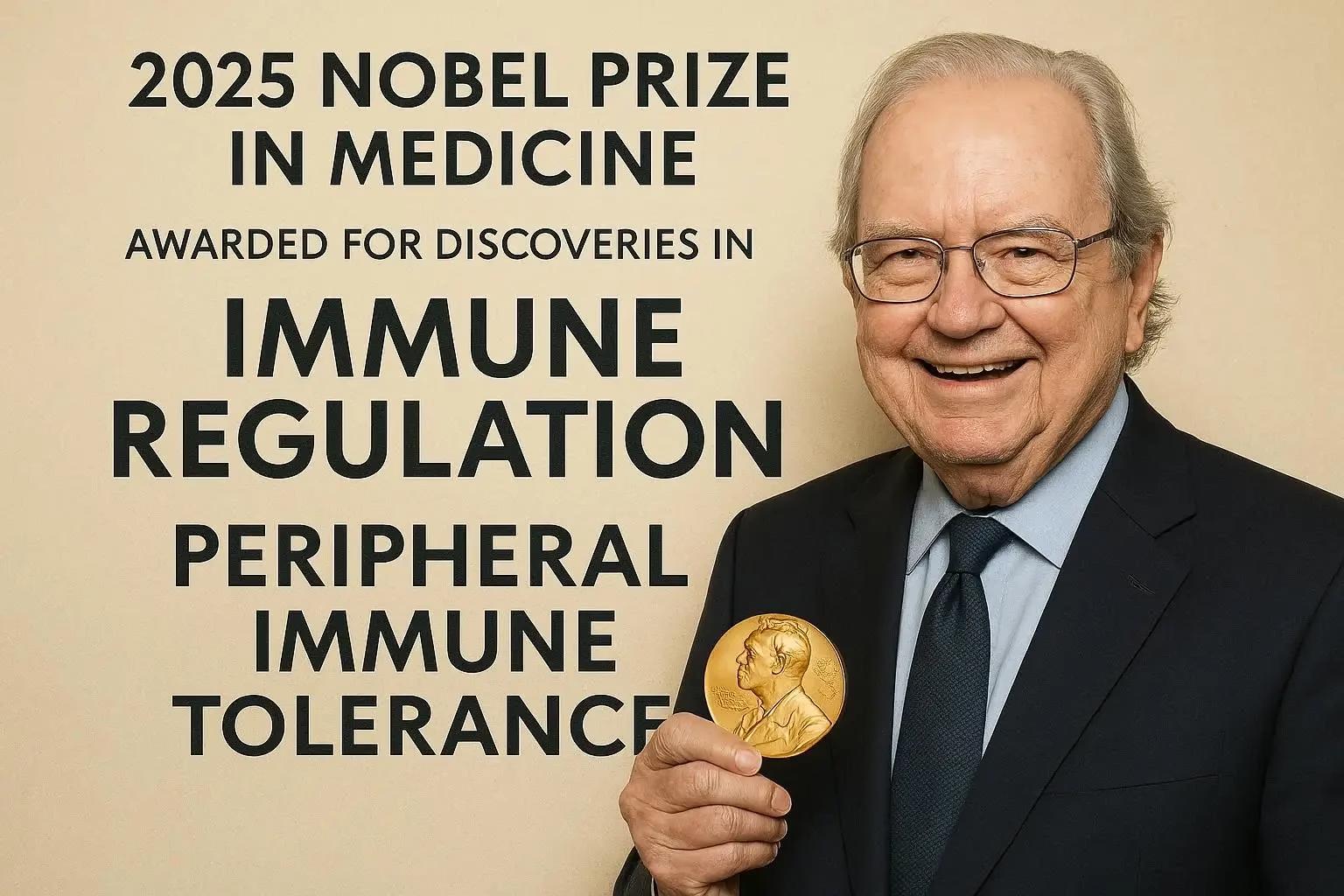
On October 6, 2025, the Nobel Assembly at the Karolinska Institutet awarded the Nobel Prize in Physiology or Medicine to three scientists—Mary E. Brunkow, Fred Ramsdell, and Shimon Sakaguchi—for their groundbreaking discoveries concerning peripheral immune tolerance. Their collective work has illuminated the mechanisms by which the immune system distinguishes between harmful invaders and the body’s own tissues, preventing autoimmune diseases and paving the way for novel therapeutic approaches.
Understanding Peripheral Immune Tolerance
The immune system is a complex network designed to protect the body from pathogens. However, without stringent regulation, it can mistakenly attack the body’s own cells, leading to autoimmune disorders. Peripheral immune tolerance refers to the mechanisms that prevent such self-reactivity, ensuring that the immune system remains vigilant against threats while safeguarding the body’s own tissues.
The Pioneering Work of the Laureates
Shimon Sakaguchi: The Discovery of Regulatory T Cells
In the early 1990s, Shimon Sakaguchi, a professor at Osaka University, identified a unique subset of T cells that played a crucial role in maintaining immune tolerance. These cells, later termed regulatory T cells (Tregs), were found to suppress immune responses, preventing the immune system from attacking the body’s own tissues. Sakaguchi’s research provided the foundational understanding of peripheral immune tolerance.
Mary E. Brunkow and Fred Ramsdell: Unraveling the Genetic Basis
Building upon Sakaguchi’s findings, Mary E. Brunkow and Fred Ramsdell, affiliated with the Institute for Systems Biology and Sonoma Biotherapeutics respectively, focused on identifying the genetic underpinnings of Tregs. Their research led to the discovery of the FOXP3 gene, a critical regulator for the development and function of Tregs. Mutations in this gene were linked to severe autoimmune diseases, underscoring its importance in immune regulation.
Implications for Medicine and Immunotherapy
The discoveries of Tregs and the FOXP3 gene have profound implications for medical science. Understanding the mechanisms of peripheral immune tolerance opens avenues for developing targeted therapies for autoimmune diseases, such as type 1 diabetes and rheumatoid arthritis. Moreover, manipulating Tregs holds potential in cancer immunotherapy, where enhancing their function could suppress tumor growth, and in transplantation medicine, where they could be used to prevent organ rejection.
A Global Perspective
The laureates’ collaborative efforts exemplify the global nature of scientific research. Their work transcends national boundaries, with Sakaguchi’s research in Japan complementing Brunkow and Ramsdell’s studies in the United States. This international collaboration has accelerated the understanding of immune regulation and its therapeutic applications, benefiting patients worldwide.
Conclusion
The 2025 Nobel Prize in Physiology or Medicine recognizes the transformative contributions of Mary E. Brunkow, Fred Ramsdell, and Shimon Sakaguchi in unraveling the complexities of the immune system’s self-regulation. Their discoveries have not only deepened our understanding of immune tolerance but also paved the way for innovative treatments for autoimmune diseases, cancer, and organ transplantation. As research continues to build upon their work, the potential for new therapeutic strategies remains vast, promising a future where immune-related diseases can be more effectively managed and treated.