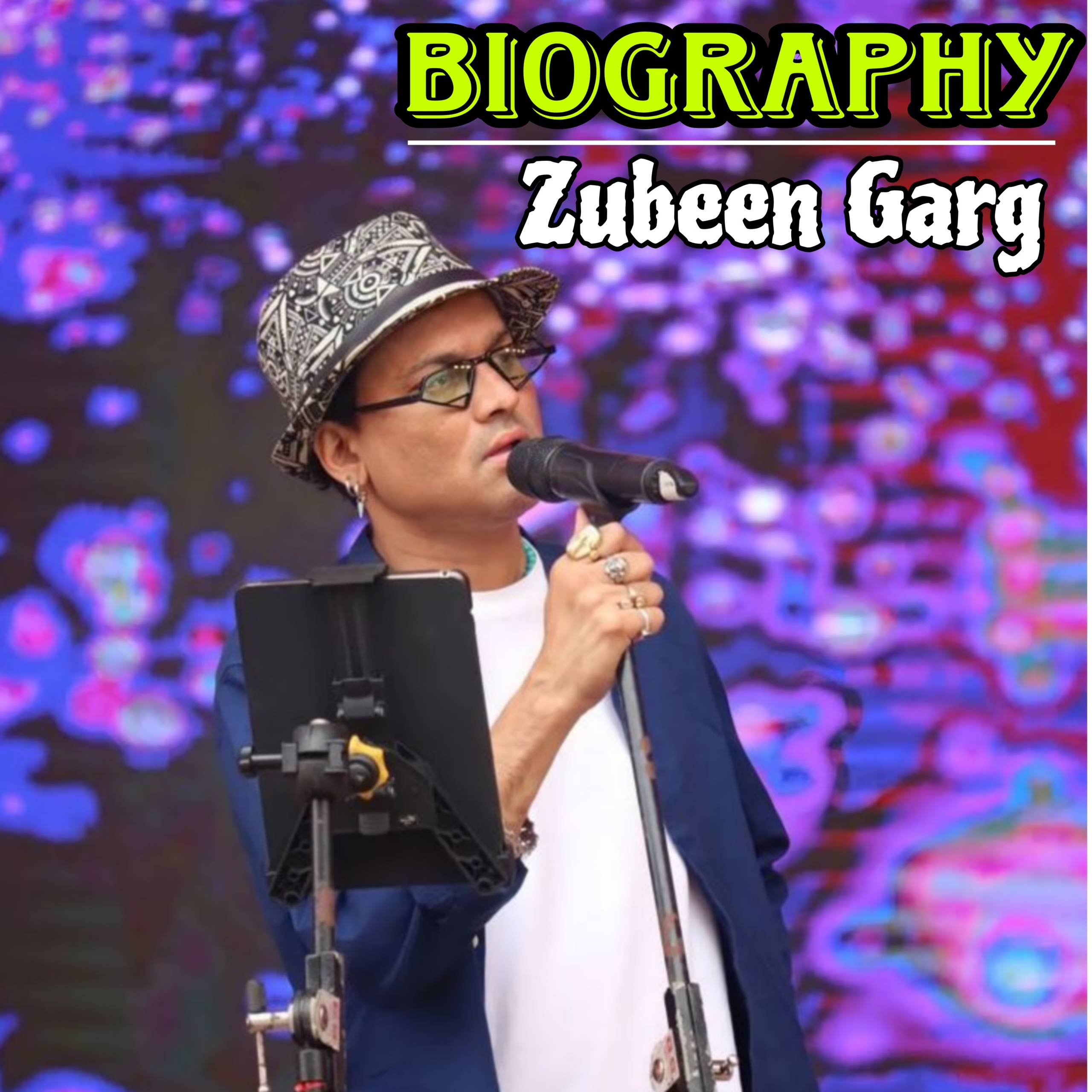
Zubeen Garg: Life, Music, and Legacy
Name: Zubeen Garg
Birth Name: Zubeen Borthakur
Date of Birth: 18 November 1972
Place of Birth: Tura, Meghalaya, India
Date of Death: 19 September 2025
Occupations: Singer, composer, music director, lyricist, actor, producer, film director, multi-instrumentalist, social activist.
Early Life and Family Background
Zubeen Garg was born as Zubeen Borthakur into a family deeply rooted in the arts and culture. His father, Mohini Mohon Borthakur (also known by the pen name Kapil Thakur), was a magistrate but also a poet and lyricist. His mother, Ily Borthakur, was a singer.
He was named “Zubeen” after Zubin Mehta, the renowned music conductor, which suggests his parents’ early inclination toward music and arts.
Although born in Meghalaya, much of his upbringing is associated with Assam. His family had roots in places like Tamulichiga (Jhanji) in Jorhat, Assam.
He had siblings: a younger sister Jongki Borthakur, who was a singer and actress; she died tragically in a road accident in 2002. He also has another sister, Dr. Palme Borthakur.
Education
- He passed his matriculation from Tamulpur Higher Secondary School.
- Later, he joined Karimganj College, then B. Borooah College in Guwahati for B.Sc studies.
- However, music drew him strongly, and he dropped out to pursue his musical career full-time.
Early Musical Career
Zubeen showed musical talent early on. As a child, he had exposure via his mother, and the cultural atmosphere of Assam (folk music, Bihu, traditional songs) played a part in shaping his sensibilities.
In 1992, when he was about 19, he released his first Assamese album titled “Anamika”. This album marked his debut in the music industry.
He followed up with more Assamese albums and songs, including Xapunor Xur, Junaki Mon, Maya, Asha, Pakhi, etc.
He also ventured into Bihu music, through albums like Ujan Piriti, which became popular.
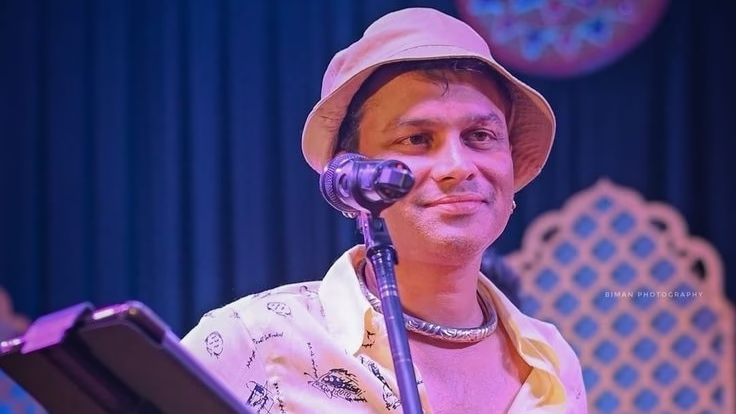
Breakthrough, Bollywood, and Wider Recognition
As his regional reputation grew, Zubeen Garg moved to Mumbai to explore opportunities in the larger Hindi film and music industry.
He released several Hindi albums (Indipop and otherwise), including Chandni Raat (1995), Chanda (1996), Jalwa (1998), Yuhi Kabhi (1998), Jadoo (1999), Sparsh (2000), etc. These helped him expand his audience beyond Assam.
His major breakthrough in Bollywood came in 2006 with the song “Ya Ali” from the film Gangster. That song became a massive hit, giving him pan-Indian fame.
He also sang many other songs in Bollywood and contributed in multiple languages. His ability to cross over from regional to national and perform in many linguistic contexts set him apart.
Musical Style, Languages, and Instruments
Zubeen Garg was known for his versatility in multiple respects:
- Languages and Dialects:
He sang in Assamese, Bengali, Hindi, and many more. In total, he sang in over 40 languages and dialects, including tribal ones. - Genres:
His music spanned folk, filmi, pop, rock, sufi, blues, etc. He could adapt to different styles while often keeping roots in Assamese and regional culture. - Instruments:
He was a multi-instrumentalist. Among the many instruments he played were tabla, guitar, harmonium, dhol, mandolin, dotara, keyboard, etc. - Song Productivity:
He recorded a large number of songs over his career. Reports suggest tens of thousands of songs. For example, over 38,000 songs in 40 languages and dialects.
Film Career
Zubeen Garg did not limit himself to singing; he also acted, directed, composed music for films, and wrote lyrics.
- Acting: He acted in many Assamese films—Hiya Diya Niya (2000) being an early one.
- Music Direction/Composition: He composed music for Assamese and other regional films. Examples include Nayak (2001) where he did the music, Tumi Mor Mathu Mor which he directed and composed, etc.
- Directorial Work: Tumi Mor Mathu Mor (2000) was his directorial debut.
Personal Life
- Zubeen Garg married Garima Saikia, a fashion designer from Golaghat, Assam, on 4 February 2002.
- His sister Jongki’s tragic death in 2002 had a deep emotional impact on him, and he released the album Xixhu in her memory.
- He expressed his views on religion, caste, identity in public; for example, he said he did not have any caste or religion.
Awards and Recognition
Over his multi-decade career, Zubeen Garg received many awards and honours:
- National Film Awards: For example, the National Film Award for Best Music Direction (Non-Feature Film) for Echoes of Silence in 2009.
- Global Indian Film Awards: He won Best Playback Singer (Male) for “Ya Ali” from Gangster (2006).
- Other regional awards: Assam, Bengali film awards, etc.
- Honorary degrees: In May 2024, he was awarded a D.Litt. (Doctor of Literature) degree by the University of Science and Technology, Meghalaya.
Controversies and Social Stance
Zubeen Garg was not without controversies; some of his outspoken public statements stirred debate:
- In 2019, he reportedly said “These Brahmins should be killed” in reference to certain ritualistic or societal norms, which led to legal complaints and public backlash. He later apologised.
- In 2024, at a Bihu concert, he made a statement that referred to the Hindu deity Krishna, saying that Krishna was not God but a man. That led to his ban (in Majuli District Satra Mahasabha) and criticism from conservative cultural and religious quarters.
At the same time, Zubeen was known for his social activism:
- He ran the Kalaguru Artiste Foundation, which took up charitable causes.
- During the COVID-19 surge, he offered his two-storeyed house in Guwahati for use as a COVID care centre.
- He used films and music to speak about issues like corruption, and he participated in public discussions.
Major Works and Hits
Some of his most remembered songs and works include:
- “Ya Ali” (Gangster, 2006) – a major Bollywood hit that broadened his audience nationwide.
- Regional Assamese hits: many albums and songs in Assamese that earned him the title of one of the most iconic voices of Assam.
- Bengali and other regional film songs. His body of work is huge, spanning many languages.
Filmography highlights:
- Tumi Mor Mathu Mor (2000) — debut as director, actor, composer.
- Hiya Diya Niya (2000) — acting and musical contributions.
- Nayak (2001) — music composer for this Assamese film.
Final Years and Passing
In 2025, Zubeen Garg was scheduled to perform at the North East Festival in Singapore.
On 19 September 2025, he passed away in Singapore following a tragic scuba diving accident. Reports indicate he reportedly suffered breathing difficulties while in the sea, was rescued, but could not be revived.
His death caused widespread grief in Assam, Northeast India, and among fans across India. He was mourned as not just a singer but as a cultural icon.
Influence, Impact, and Legacy
Zubeen Garg’s impact goes beyond just a collection of songs. His career had many dimensions:
- Cultural Bridge Between Regional and Mainstream
Coming from Assam and performing in Assamese and many tribal and regional languages, he took regional music to broader platforms. At the same time, his success in Bollywood and Hindi film songs helped bring attention to the Northeast’s artistic talent. - Representation & Identity
For many in Assam and Northeast India, Zubeen was more than an entertainer; he was a symbol of cultural pride, identity, and possibility. His voice gave many a sense that regional languages and culture could coexist and succeed in the national domain. - Prolific Output
Recording tens of thousands of songs, across 40+ languages is a measure of both versatility and dedication. That output also means his music covers many moods, styles, and audiences. - Social & Philanthropic Action
His work with charitable causes, willingness to use his resources (housing in Guwahati during COVID, foundation work, addressing issues via film) shows that he was socially conscious and used his public stature for influence beyond entertainment. - Inspiring Next Generation
Young artists in Assam and the Northeast often cite him as an influence. His career showed that one could begin from regional beginnings and reach national fame without losing regional roots. - Awards and Academic Recognition
His D.Litt award (2024) is one sign of how academia, not just fans and industry, recognized his contributions. Awards from film bodies, regional media, etc., reinforced the importance of his work.
Challenges and Criticisms
Zubeen’s outspoken personality sometimes brought controversies. His remarks on caste, religion and social norms were not always well-received; he faced criticism, legal cases, bans. These episodes highlight the tensions that can arise when artists engage publicly in social/political issues. However, many also saw his statements as expressions of his beliefs, not just provocations.
Conclusion
Zubeen Garg was an artist of rare breadth and depth. Born into a milieu that appreciated poetry and music, he developed a multi-faceted career—starting with Assamese albums, growing into Bollywood fame, and crossing linguistic boundaries like few others. His work was prolific; his impact, especially on Assamese culture and representation, enduring.
His sudden death in 2025 left a void, but the legacy of his music, his identity as an Assamese cultural figure, and the boldness with which he lived and spoke ensure that Zubeen Garg will be remembered not just as a singer, but as a symbol: of regional talent, of musical diversity, and of an artist who dared to cross borders—linguistic, cultural, and musical.
If you like, I can also send a version with more focus on his discography / works, or more personal stories, for use in a blog or article. Would that be useful?